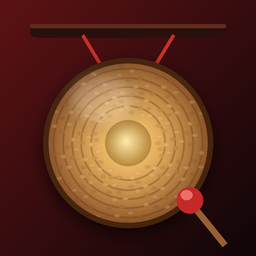
A gong is not one note. It is a strike, then a swell, then a long fade, and every strike is different. Gong: Sound Bath Instrument is an iPhone gong that you play with a finger.
Playing
Tap the gong to strike it: near the center for a full strike, near the edge for a lighter one. Hold a finger on it to mute it, and rub it to make it moan. The sound is made by the app as you play, from the resonances of each gong, so it answers to where and how it is struck.
The gongs
The wind gong shimmers with no single pitch, the temple bowl rings long and pure, and the tam-tam starts with a deep hum before its roar swells. The large opera gong slides down in pitch as it fades and the small one climbs; the gamelan gong pulses as two close tones beat; a tuned gong plays in any key.
Sessions
A session sounds a gong to open, one at each interval and gongs to close, for a sitting, a yoga class, practice or a rehearsal. If the phone locks, the gongs come as notices with the gong's own sound.
What it costs
The wind gong and the temple bowl and sessions up to ten minutes are free. Gong Pro, $19.99 a month or $49.99 once, adds every gong, soft and hard mallets and the moan, rooms from a small room to a stone hall, and sessions of any length with intervals. There is no account and no advertising.
It needs an iPhone with iOS 17 or newer. Its App Store link is on its listing once Apple has approved the app.
Questions people ask
Is the sound recorded?
No. Each gong is made by the app as you play, which is why a strike near the edge sounds lighter than one at the center.
Can I use it to time a class?
Yes. A session sounds a gong to open, at each interval you choose and to close, and works with the screen off.
Which gongs are free?
The wind gong and the temple bowl. The tam-tam, opera gongs, tuned gong and gamelan gong need Gong Pro.